Concept mining is an activity that results in the extraction of concepts from artifacts. Solutions to the task typically involve aspects of artificial intelligence and statistics, such as data mining and text mining. Because artifacts are typically a loosely structured sequence of words and other symbols (rather than concepts), the problem is nontrivial, but it can provide powerful insights into the meaning, provenance and similarity of documents. == Methods == Traditionally, the conversion of words to concepts has been performed using a thesaurus, and for computational techniques the tendency is to do the same. The thesauri used are either specially created for the task, or a pre-existing language model, usually related to Princeton's WordNet. The mappings of words to concepts are often ambiguous. Typically each word in a given language will relate to several possible concepts. Humans use context to disambiguate the various meanings of a given piece of text, where available machine translation systems cannot easily infer context. For the purposes of concept mining, however, these ambiguities tend to be less important than they are with machine translation, for in large documents the ambiguities tend to even out, much as is the case with text mining. There are many techniques for disambiguation that may be used. Examples are linguistic analysis of the text and the use of word and concept association frequency information that may be inferred from large text corpora. Recently, techniques that base on semantic similarity between the possible concepts and the context have appeared and gained interest in the scientific community. == Applications == === Detecting and indexing similar documents in large corpora === One of the spin-offs of calculating document statistics in the concept domain, rather than the word domain, is that concepts form natural tree structures based on hypernymy and meronymy. These structures can be used to generate simple tree membership statistics, that can be used to locate any document in a Euclidean concept space. If the size of a document is also considered as another dimension of this space then an extremely efficient indexing system can be created. This technique is currently in commercial use locating similar legal documents in a 2.5 million document corpus. === Clustering documents by topic === Standard numeric clustering techniques may be used in "concept space" as described above to locate and index documents by the inferred topic. These are numerically far more efficient than their text mining cousins, and tend to behave more intuitively, in that they map better to the similarity measures a human would generate.
Client honeypot
Honeypots are security devices whose value lie in being probed and compromised. Traditional honeypots are servers (or devices that expose server services) that wait passively to be attacked. Client Honeypots are active security devices in search of malicious servers that attack clients. The client honeypot poses as a client and interacts with the server to examine whether an attack has occurred. Often the focus of client honeypots is on web browsers, but any client that interacts with servers can be part of a client honeypot (for example ftp, email, ssh, etc.). There are several terms that are used to describe client honeypots. Besides client honeypot, which is the generic classification, honeyclient is the other term that is generally used and accepted. However, there is a subtlety here, as "honeyclient" is actually a homograph that could also refer to the first known open source client honeypot implementation (see below), although this should be clear from the context. == Architecture == A client honeypot is composed of three components. The first component, a queuer, is responsible for creating a list of servers for the client to visit. This list can be created, for example, through crawling. The second component is the client itself, which is able to make a requests to servers identified by the queuer. After the interaction with the server has taken place, the third component, an analysis engine, is responsible for determining whether an attack has taken place on the client honeypot. In addition to these components, client honeypots are usually equipped with some sort of containment strategy to prevent successful attacks from spreading beyond the client honeypot. This is usually achieved through the use of firewalls and virtual machine sandboxes. Analogous to traditional server honeypots, client honeypots are mainly classified by their interaction level: high or low; which denotes the level of functional interaction the server can utilize on the client honeypot. In addition to this there are also newly hybrid approaches which denotes the usage of both high and low interaction detection techniques. == High interaction == High interaction client honeypots are fully functional systems comparable to real systems with real clients. As such, no functional limitations (besides the containment strategy) exist on high interaction client honeypots. Attacks on high interaction client honeypots are detected via inspection of the state of the system after a server has been interacted with. The detection of changes to the client honeypot may indicate the occurrence of an attack against that has exploited a vulnerability of the client. An example of such a change is the presence of a new or altered file. High interaction client honeypots are very effective at detecting unknown attacks on clients. However, the tradeoff for this accuracy is a performance hit from the amount of system state that has to be monitored to make an attack assessment. Also, this detection mechanism is prone to various forms of evasion by the exploit. For example, an attack could delay the exploit from immediately triggering (time bombs) or could trigger upon a particular set of conditions or actions (logic bombs). Since no immediate, detectable state change occurred, the client honeypot is likely to incorrectly classify the server as safe even though it did successfully perform its attack on the client. Finally, if the client honeypots are running in virtual machines, then an exploit may try to detect the presence of the virtual environment and cease from triggering or behave differently. === Capture-HPC === Capture [1] is a high interaction client honeypot developed by researchers at Victoria University of Wellington, NZ. Capture differs from existing client honeypots in various ways. First, it is designed to be fast. State changes are being detected using an event based model allowing to react to state changes as they occur. Second, Capture is designed to be scalable. A central Capture server is able to control numerous clients across a network. Third, Capture is supposed to be a framework that allows to utilize different clients. The initial version of Capture supports Internet Explorer, but the current version supports all major browsers (Internet Explorer, Firefox, Opera, Safari) as well as other HTTP aware client applications, such as office applications and media players. === HoneyClient === HoneyClient [2] is a web browser based (IE/FireFox) high interaction client honeypot designed by Kathy Wang in 2004 and subsequently developed at MITRE. It was the first open source client honeypot and is a mix of Perl, C++, and Ruby. HoneyClient is state-based and detects attacks on Windows clients by monitoring files, process events, and registry entries. It has integrated the Capture-HPC real-time integrity checker to perform this detection. HoneyClient also contains a crawler, so it can be seeded with a list of initial URLs from which to start and can then continue to traverse web sites in search of client-side malware. === HoneyMonkey (dead since 2010) === HoneyMonkey [3] is a web browser based (IE) high interaction client honeypot implemented by Microsoft in 2005. It is not available for download. HoneyMonkey is state based and detects attacks on clients by monitoring files, registry, and processes. A unique characteristic of HoneyMonkey is its layered approach to interacting with servers in order to identify zero-day exploits. HoneyMonkey initially crawls the web with a vulnerable configuration. Once an attack has been identified, the server is reexamined with a fully patched configuration. If the attack is still detected, one can conclude that the attack utilizes an exploit for which no patch has been publicly released yet and therefore is quite dangerous. === SHELIA (dead since 2009) === Shelia [4] is a high interaction client honeypot developed by Joan Robert Rocaspana at Vrije Universiteit Amsterdam. It integrates with an email reader and processes each email it receives (URLs & attachments). Depending on the type of URL or attachment received, it opens a different client application (e.g. browser, office application, etc.) It monitors whether executable instructions are executed in data area of memory (which would indicate a buffer overflow exploit has been triggered). With such an approach, SHELIA is not only able to detect exploits, but is able to actually ward off exploits from triggering. === UW Spycrawler === The Spycrawler [5] developed at the University of Washington is yet another browser based (Mozilla) high interaction client honeypot developed by Moshchuk et al. in 2005. This client honeypot is not available for download. The Spycrawler is state based and detects attacks on clients by monitoring files, processes, registry, and browser crashes. Spycrawlers detection mechanism is event based. Further, it increases the passage of time of the virtual machine the Spycrawler is operating in to overcome (or rather reduce the impact of) time bombs. === Web Exploit Finder === WEF [6] is an implementation of an automatic drive-by-download – detection in a virtualized environment, developed by Thomas Müller, Benjamin Mack and Mehmet Arziman, three students from the Hochschule der Medien (HdM), Stuttgart during the summer term in 2006. WEF can be used as an active HoneyNet with a complete virtualization architecture underneath for rollbacks of compromised virtualized machines. == Low interaction == Low interaction client honeypots differ from high interaction client honeypots in that they do not utilize an entire real system, but rather use lightweight or simulated clients to interact with the server. (in the browser world, they are similar to web crawlers). Responses from servers are examined directly to assess whether an attack has taken place. This could be done, for example, by examining the response for the presence of malicious strings. Low interaction client honeypots are easier to deploy and operate than high interaction client honeypots and also perform better. However, they are likely to have a lower detection rate since attacks have to be known to the client honeypot in order for it to detect them; new attacks are likely to go unnoticed. They also suffer from the problem of evasion by exploits, which may be exacerbated due to their simplicity, thus making it easier for an exploit to detect the presence of the client honeypot. === HoneyC === HoneyC [7] is a low interaction client honeypot developed at Victoria University of Wellington by Christian Seifert in 2006. HoneyC is a platform independent open source framework written in Ruby. It currently concentrates driving a web browser simulator to interact with servers. Malicious servers are detected by statically examining the web server's response for malicious strings through the usage of Snort signatures. === Monkey-Spider (dead since 2008) === Monkey-Spider [8] is a low-interaction client honeypot i
Cost-sensitive machine learning
Cost-sensitive machine learning is an approach within machine learning that considers varying costs associated with different types of errors. This method diverges from traditional approaches by introducing a cost matrix, explicitly specifying the penalties or benefits for each type of prediction error. The inherent difficulty which cost-sensitive machine learning tackles is that minimizing different kinds of classification errors is a multi-objective optimization problem. == Overview == Cost-sensitive machine learning optimizes models based on the specific consequences of misclassifications, making it a valuable tool in various applications. It is especially useful in problems with a high imbalance in class distribution and a high imbalance in associated costs Cost-sensitive machine learning introduces a scalar cost function in order to find one (of multiple) Pareto optimal points in this multi-objective optimization problem (similar to the Weighted sum model) == Cost Matrix == The cost matrix is a crucial element within cost-sensitive modeling, explicitly defining the costs or benefits associated with different prediction errors in classification tasks. Represented as a table, the matrix aligns true and predicted classes, assigning a cost value to each combination. For instance, in binary classification, it may distinguish costs for false positives and false negatives. The utility of the cost matrix lies in its application to calculate the expected cost or loss. The formula, expressed as a double summation, utilizes joint probabilities: Expected Loss = ∑ i ∑ j P ( Actual i , Predicted j ) ⋅ Cost Actual i , Predicted j {\displaystyle {\text{Expected Loss}}=\sum _{i}\sum _{j}P({\text{Actual}}_{i},{\text{Predicted}}_{j})\cdot {\text{Cost}}_{{\text{Actual}}_{i},{\text{Predicted}}_{j}}} Here, P ( Actual i , Predicted j ) {\displaystyle P({\text{Actual}}_{i},{\text{Predicted}}_{j})} denotes the joint probability of actual class i {\displaystyle i} and predicted class j {\displaystyle j} , providing a nuanced measure that considers both the probabilities and associated costs. This approach allows practitioners to fine-tune models based on the specific consequences of misclassifications, adapting to scenarios where the impact of prediction errors varies across classes. == Applications == === Fraud Detection === In the realm of data science, particularly in finance, cost-sensitive machine learning is applied to fraud detection. By assigning different costs to false positives and false negatives, models can be fine-tuned to minimize the overall financial impact of misclassifications. === Medical Diagnostics === In healthcare, cost-sensitive machine learning plays a role in medical diagnostics. The approach allows for customization of models based on the potential harm associated with misdiagnoses, ensuring a more patient-centric application of machine learning algorithms. == Challenges == A typical challenge in cost-sensitive machine learning is the reliable determination of the cost matrix which may evolve over time. == Literature == Cost-Sensitive Machine Learning. USA, CRC Press, 2011. ISBN 9781439839287 Abhishek, K., Abdelaziz, D. M. (2023). Machine Learning for Imbalanced Data: Tackle Imbalanced Datasets Using Machine Learning and Deep Learning Techniques. (n.p.): Packt Publishing. ISBN 9781801070881
Socially assistive robot
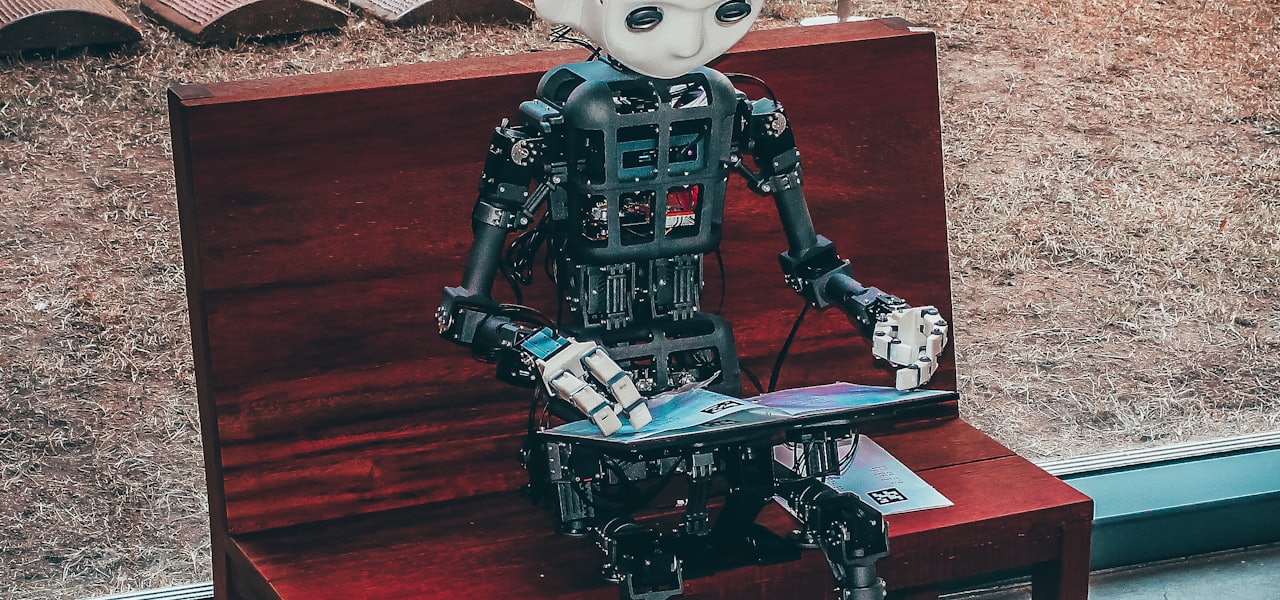
A socially assistive robot (SAR) aids users through social engagement and support rather than through physical tasks and interactions. == Background == The field of socially assistive robotics emerged in the early 2000s, following the emergence of the field of social robots. In contrast to social robots, SARs aid users with specific goals related to behavior change rather than serving as purely social entities. The term "Socially assistive robot" was initially defined by Maja Matarić and David Feil-Seifer in 2005. Since its inception, the field has gained substantial recognition, featuring numerous research projects, a wealth of global research publications, startup companies, and a growing array of products on the consumer market. The COVID-19 pandemic has underscored the immense potential of socially assistive robots, particularly in addressing the needs of large user populations, including children engaged in remote learning, elderly individuals grappling with loneliness, and those affected by social isolation and its associated negative consequences. == Characteristics of interaction == SARs rely on artificial intelligence (AI) to generate real-time, responsive, natural, and meaningful robot behaviors during interactions with humans. The robots employ various forms of communication, such as facial expressions, gestures, body movements, and speech. In contrast to robots intended for physical tasks, SARs are designed to support and motivate users to perform their own tasks. The tasks a user engages in can be physical (e.g., rehabilitation exercises for post-stroke users), cognitive (e.g., dementia screening for elderly users), or social (e.g., turn-taking for users with autism spectrum disorders). This complex interaction involves detecting and interpreting the user's movement, behavior, intent, goals, speech, and preferences. Machine learning and robot learning techniques are frequently employed to enhance the robot's understanding of the user, predict user preferences, and provide effective assistance. The effectiveness of socially assistive robots is assessed based on objective measurements of user performance and improvement resulting from the robot’s assistance and support. Unlike other branches of robotics, where effectiveness depends on the robot's physical task completion, SAR measures the success of the robot based on the user's progress and achievements. This evaluation is carried out using quantitative objective metrics, such as time spent on tasks, accuracy, retention, and verbalization, as well as quantitative subjective metrics, such as user survey tools. SAR is based on the large body of evidence showing that users tend to respond more positively to interactions with physical robots compared to interactions with screens. Interaction with physical robots also encourages users to learn and retain more information than screen-based interactions. This fundamental insight underlines why physical robots in SAR applications are more effective, as opposed to interactions solely involving screens, tablets, or computers. == Uses and applications == SARs have been developed and validated in a wide array of applications, including healthcare, elder care, education, and training. For example, SARs have been developed to support children on the autism spectrum in acquiring and practicing social and cognitive skills, to motivate and coach stroke patients throughout their rehabilitation exercises, monitoring individuals health (ex. fall detection), and to encourage elderly users to be more physically and socially active. There is a concern that technophobia and lack of trust in robots will pose a barrier to the effectiveness of SARs in older adults.
Artificial intelligence of things
Artificial Intelligence of Things (AIoT) is the combination of artificial intelligence (AI) technologies with the Internet of things (IoT) infrastructure to create systems capable of sensing, learning, and acting on data without continuous human intervention. While IoT focuses on connectivity and sensor data collection, AI enables IoT devices to analyse data in real time and produce actionable outputs, including automated decisions at the edge. == Applications == === Manufacturing and predictive maintenance === Manufacturing accounts for the largest share of AIoT adoption by industry vertical. A common application is predictive maintenance, where sensors measuring vibration, temperature, current draw, and acoustic emissions feed machine learning models trained to detect signatures that precede equipment failure. These systems can flag developing faults weeks or months in advance, and in more advanced deployments can autonomously adjust machine parameters such as motor speed or cooling cycles to delay or prevent failure. === Other industries === In healthcare, AIoT enables remote patient monitoring through wearable devices that collect vital signs and apply AI models to detect anomalies or predict deterioration. In logistics, GPS and telematics sensors combined with AI models support real-time route optimisation, vehicle maintenance prediction, and fuel cost forecasting. Smart building systems use occupancy, temperature, and energy sensors with AI to dynamically adjust HVAC and lighting, reducing energy consumption. == Architecture == AIoT systems typically operate across three layers: a device layer of sensors and actuators that collect data, a connectivity layer that transmits data via protocols such as MQTT or HTTP, and a compute layer where AI models process the data either in the cloud or at the edge. The trend toward edge-based processing, where inference runs on low-cost processors near the data source rather than in a centralised cloud, has accelerated as hardware costs have fallen and applications increasingly require sub-second response times. == Market == Market sizing estimates for AIoT vary significantly depending on scope and definition. Fortune Business Insights valued the AIoT market at USD 35.65 billion in 2023, projecting growth to USD 253.86 billion by 2030 at a compound annual growth rate of 32.4%. Grand View Research estimated the broader market at USD 171.4 billion in 2024 with a CAGR of 31.7% through 2030, reflecting a wider definition that includes AI-integrated hardware components. North America accounted for approximately 40% of global market share in 2024, with the Asia-Pacific region projected as the fastest-growing market.
Deep learning
In machine learning, deep learning (DL) focuses on utilizing multilayered neural networks to perform tasks such as classification, regression, and representation learning. The field takes inspiration from biological neuroscience and revolves around stacking artificial neurons into layers and "training" them to process data. The adjective "deep" refers to the use of multiple layers (ranging from three to several hundred or thousands) in the network. Methods used can be supervised, semi-supervised or unsupervised. Some common deep learning network architectures include fully connected networks, deep belief networks, recurrent neural networks, convolutional neural networks, generative adversarial networks, transformers, and neural radiance fields. These architectures have been applied to fields including computer vision, speech recognition, natural language processing, machine translation, bioinformatics, drug design, medical image analysis, climate science, material inspection and board game programs, where they have produced results comparable to and in some cases surpassing human expert performance. Early forms of neural networks were inspired by information processing and distributed communication nodes in biological systems, particularly the human brain. However, current neural networks do not intend to model the brain function of organisms, and are generally seen as low-quality models for that purpose. == Overview == Most modern deep learning models are based on multi-layered neural networks such as convolutional neural networks and transformers, although they can also include propositional formulas or latent variables organized layer-wise in deep generative models such as the nodes in deep belief networks and deep Boltzmann machines. Fundamentally, deep learning refers to a class of machine learning algorithms in which a hierarchy of layers is used to transform input data into a progressively more abstract and composite representation. For example, in an image recognition model, the raw input may be an image (represented as a tensor of pixels). The first representational layer may attempt to identify basic shapes such as lines and circles, the second layer may compose and encode arrangements of edges, the third layer may encode a nose and eyes, and the fourth layer may recognize that the image contains a face. Importantly, a deep learning process can learn which features to optimally place at which level on its own. Prior to deep learning, machine learning techniques often involved hand-crafted feature engineering to transform the data into a more suitable representation for a classification algorithm to operate on. In the deep learning approach, features are not hand-crafted and the model discovers useful feature representations from the data automatically. This does not eliminate the need for hand-tuning; for example, varying numbers of layers and layer sizes can provide different degrees of abstraction. The word "deep" in "deep learning" refers to the number of layers through which the data is transformed. More precisely, deep learning systems have a substantial credit assignment path (CAP) depth. The CAP is the chain of transformations from input to output. CAPs describe potentially causal connections between input and output. For a feedforward neural network, the depth of the CAPs is that of the network and is the number of hidden layers plus one (as the output layer is also parameterized). For recurrent neural networks, in which a signal may propagate through a layer more than once, the CAP depth is potentially unlimited. No universally agreed-upon threshold of depth divides shallow learning from deep learning, but most researchers agree that deep learning involves CAP depth higher than two. CAP of depth two has been shown to be a universal approximator in the sense that it can emulate any function. Beyond that, more layers do not add to the function approximator ability of the network. Deep models (CAP > two) are able to extract better features than shallow models and hence, extra layers help in learning the features effectively. Deep learning architectures can be constructed with a greedy layer-by-layer method. Deep learning helps to disentangle these abstractions and pick out which features improve performance. Deep learning algorithms can be applied to unsupervised learning tasks. This is an important benefit because unlabeled data is more abundant than labeled data. Examples of deep structures that can be trained in an unsupervised manner are deep belief networks. The term deep learning was introduced to the machine learning community by Rina Dechter in 1986, and to artificial neural networks by Igor Aizenberg and colleagues in 2000, in the context of Boolean threshold neurons. The etymology of the term is more complicated. == Interpretations == Deep neural networks are generally interpreted in terms of the universal approximation theorem or probabilistic inference. The classic universal approximation theorem concerns the capacity of feedforward neural networks with a single hidden layer of finite size to approximate continuous functions. In 1989, the first proof was published by George Cybenko for sigmoid activation functions and was generalised to feed-forward multi-layer architectures in 1991 by Kurt Hornik. Recent work also showed that universal approximation also holds for non-bounded activation functions such as Kunihiko Fukushima's rectified linear unit. The universal approximation theorem for deep neural networks concerns the capacity of networks with bounded width but the depth is allowed to grow. Lu et al. proved that if the width of a deep neural network with ReLU activation is strictly larger than the input dimension, then the network can approximate any Lebesgue integrable function; if the width is smaller or equal to the input dimension, then a deep neural network is not a universal approximator. The probabilistic interpretation derives from the field of machine learning. It features inference, as well as the optimization concepts of training and testing, related to fitting and generalization, respectively. More specifically, the probabilistic interpretation considers the activation nonlinearity as a cumulative distribution function. The probabilistic interpretation led to the introduction of dropout as regularizer in neural networks. The probabilistic interpretation was introduced by researchers including Hopfield, Widrow and Narendra and popularized in surveys such as the one by Bishop. == History == === Before 1980 === There are two types of artificial neural network (ANN): feedforward neural network (FNN) or multilayer perceptron (MLP) and recurrent neural networks (RNN). RNNs have cycles in their connectivity structure, whereas FNNs do not. In the 1920s, Wilhelm Lenz and Ernst Ising created the Ising model which is essentially a non-learning RNN architecture consisting of neuron-like threshold elements. In 1972, Shun'ichi Amari made this architecture adaptive. His learning RNN was republished by John Hopfield in 1982. Other early recurrent neural networks were published by Kaoru Nakano in 1971. Already in 1948, Alan Turing produced work on "Intelligent Machinery" that was not published in his lifetime, containing "ideas related to artificial evolution and learning RNNs". Frank Rosenblatt (1958) proposed the perceptron, an MLP with 3 layers: an input layer, a hidden layer with randomized weights that did not learn, and an output layer. He later published a 1962 book that also introduced variants and computer experiments, including a version with four-layer perceptrons "with adaptive preterminal networks" where the last two layers have learned weights (here he credits H. D. Block and B. W. Knight). The book cites an earlier network by R. D. Joseph (1960) "functionally equivalent to a variation of" this four-layer system (the book mentions Joseph over 30 times). Should Joseph therefore be considered the originator of proper adaptive multilayer perceptrons with learning hidden units? Unfortunately, the learning algorithm was not a functional one, and fell into oblivion. The first working deep learning algorithm was the Group method of data handling, a method to train arbitrarily deep neural networks, published by Alexey Ivakhnenko and Lapa in 1965. They regarded it as a form of polynomial regression, or a generalization of Rosenblatt's perceptron to handle more complex, nonlinear, and hierarchical relationships. A 1971 paper described a deep network with eight layers trained by this method, which is based on layer by layer training through regression analysis. Superfluous hidden units are pruned using a separate validation set. Since the activation functions of the nodes are Kolmogorov-Gabor polynomials, these were also the first deep networks with multiplicative units or "gates". The first deep learning multilayer perceptron trained by stochastic gradient descent was published in 1967 by Shun'ichi
Random feature
Random features (RF) are a technique used in machine learning to approximate kernel methods, introduced by Ali Rahimi and Ben Recht in their 2007 paper "Random Features for Large-Scale Kernel Machines", and extended by. RF uses a Monte Carlo approximation to kernel functions by randomly sampled feature maps. It is used for datasets that are too large for traditional kernel methods like support vector machine, kernel ridge regression, and gaussian process. == Mathematics == === Kernel method === Given a feature map ϕ : R d → V {\textstyle \phi :\mathbb {R} ^{d}\to V} , where V {\textstyle V} is a Hilbert space (more specifically, a reproducing kernel Hilbert space), the kernel trick replaces inner products in feature space ⟨ ϕ ( x i ) , ϕ ( x j ) ⟩ V {\displaystyle \langle \phi (x_{i}),\phi (x_{j})\rangle _{V}} by a kernel function k ( x i , x j ) : R d × R d → R {\displaystyle k(x_{i},x_{j}):\mathbb {R} ^{d}\times \mathbb {R} ^{d}\to \mathbb {R} } Kernel methods replaces linear operations in high-dimensional space by operations on the kernel matrix: K X := [ k ( x i , x j ) ] i , j ∈ 1 : N {\displaystyle K_{X}:=[k(x_{i},x_{j})]_{i,j\in 1:N}} where N {\textstyle N} is the number of data points. === Random kernel method === The problem with kernel methods is that the kernel matrix K X {\textstyle K_{X}} has size N × N {\textstyle N\times N} . This becomes computationally infeasible when N {\textstyle N} reaches the order of a million. The random kernel method replaces the kernel function k {\textstyle k} by an inner product in low-dimensional feature space R D {\textstyle \mathbb {R} ^{D}} : k ( x , y ) ≈ ⟨ z ( x ) , z ( y ) ⟩ {\displaystyle k(x,y)\approx \langle z(x),z(y)\rangle } where z {\textstyle z} is a randomly sampled feature map z : R d → R D {\textstyle z:\mathbb {R} ^{d}\to \mathbb {R} ^{D}} . This converts kernel linear regression into linear regression in feature space, kernel SVM into SVM in feature space, etc. Since we have K X ≈ Z X T Z X {\displaystyle K_{X}\approx Z_{X}^{T}Z_{X}} where Z X = [ z ( x 1 ) , … , z ( x N ) ] {\displaystyle Z_{X}=[z(x_{1}),\dots ,z(x_{N})]} , these methods no longer involve matrices of size O ( N 2 ) {\textstyle O(N^{2})} , but only random feature matrices of size O ( D N ) {\textstyle O(DN)} . == Random Fourier feature == === Radial basis function kernel === The radial basis function (RBF) kernel on two samples x i , x j ∈ R d {\displaystyle x_{i},x_{j}\in \mathbb {R} ^{d}} is defined as k ( x i , x j ) = exp ( − ‖ x i − x j ‖ 2 2 σ 2 ) {\displaystyle k(x_{i},x_{j})=\exp \left(-{\frac {\|x_{i}-x_{j}\|^{2}}{2\sigma ^{2}}}\right)} where ‖ x i − x j ‖ 2 {\displaystyle \|x_{i}-x_{j}\|^{2}} is the squared Euclidean distance and σ {\displaystyle \sigma } is a free parameter defining the shape of the kernel. It can be approximated by a random Fourier feature map z : R d → R 2 D {\displaystyle z:\mathbb {R} ^{d}\to \mathbb {R} ^{2D}} : z ( x ) := 1 D [ cos ⟨ ω 1 , x ⟩ , sin ⟨ ω 1 , x ⟩ , … , cos ⟨ ω D , x ⟩ , sin ⟨ ω D , x ⟩ ] T {\displaystyle z(x):={\frac {1}{\sqrt {D}}}[\cos \langle \omega _{1},x\rangle ,\sin \langle \omega _{1},x\rangle ,\ldots ,\cos \langle \omega _{D},x\rangle ,\sin \langle \omega _{D},x\rangle ]^{T}} where ω 1 , . . . , ω D {\displaystyle \omega _{1},...,\omega _{D}} are IID samples from the multidimensional normal distribution N ( 0 , σ − 2 I ) {\displaystyle N(0,\sigma ^{-2}I)} . Since cos , sin {\displaystyle \cos ,\sin } are bounded, there is a stronger convergence guarantee by Hoeffding's inequality. === Random Fourier features === By Bochner's theorem, the above construction can be generalized to arbitrary positive definite shift-invariant kernel k ( x , y ) = k ( x − y ) {\displaystyle k(x,y)=k(x-y)} . Define its Fourier transform p ( ω ) = 1 2 π ∫ R d e − j ⟨ ω , Δ ⟩ k ( Δ ) d Δ {\displaystyle p(\omega )={\frac {1}{2\pi }}\int _{\mathbb {R} ^{d}}e^{-j\langle \omega ,\Delta \rangle }k(\Delta )d\Delta } then ω 1 , . . . , ω D {\displaystyle \omega _{1},...,\omega _{D}} are sampled IID from the probability distribution with probability density p {\displaystyle p} . This applies for other kernels like the Laplace kernel and the Cauchy kernel. === Neural network interpretation === Given a random Fourier feature map z {\displaystyle z} , training the feature on a dataset by featurized linear regression is equivalent to fitting complex parameters θ 1 , … , θ D ∈ C {\displaystyle \theta _{1},\dots ,\theta _{D}\in \mathbb {C} } such that f θ ( x ) = R e ( ∑ k θ k e i ⟨ ω k , x ⟩ ) {\displaystyle f_{\theta }(x)=\mathrm {Re} \left(\sum _{k}\theta _{k}e^{i\langle \omega _{k},x\rangle }\right)} which is a neural network with a single hidden layer, with activation function t ↦ e i t {\displaystyle t\mapsto e^{it}} , zero bias, and the parameters in the first layer frozen. In the overparameterized case, when 2 D ≥ N {\displaystyle 2D\geq N} , the network linearly interpolates the dataset { ( x i , y i ) } i ∈ 1 : N {\displaystyle \{(x_{i},y_{i})\}_{i\in 1:N}} , and the network parameters is the least-norm solution: θ ^ = arg min θ ∈ C D , f θ ( x k ) = y k ∀ k ∈ 1 : N ‖ θ ‖ {\displaystyle {\hat {\theta }}=\arg \min _{\theta \in \mathbb {C} ^{D},f_{\theta }(x_{k})=y_{k}\forall k\in 1:N}\|\theta \|} At the limit of D → ∞ {\displaystyle D\to \infty } , the L2 norm ‖ θ ^ ‖ → ‖ f K ‖ H {\displaystyle \|{\hat {\theta }}\|\to \|f_{K}\|_{H}} where f K {\displaystyle f_{K}} is the interpolating function obtained by the kernel regression with the original kernel, and ‖ ⋅ ‖ H {\displaystyle \|\cdot \|_{H}} is the norm in the reproducing kernel Hilbert space for the kernel. == Other examples == === Random binning features === A random binning features map partitions the input space using randomly shifted grids at randomly chosen resolutions and assigns to an input point a binary bit string that corresponds to the bins in which it falls. The grids are constructed so that the probability that two points x i , x j ∈ R d {\displaystyle x_{i},x_{j}\in \mathbb {R} ^{d}} are assigned to the same bin is proportional to K ( x i , x j ) {\displaystyle K(x_{i},x_{j})} . The inner product between a pair of transformed points is proportional to the number of times the two points are binned together, and is therefore an unbiased estimate of K ( x i , x j ) {\displaystyle K(x_{i},x_{j})} . Since this mapping is not smooth and uses the proximity between input points, Random Binning Features works well for approximating kernels that depend only on the L 1 {\displaystyle L_{1}} distance between datapoints. === Orthogonal random features === Orthogonal random features uses a random orthogonal matrix instead of a random Fourier matrix. == Historical context == In NIPS 2006, deep learning had just become competitive with linear models like PCA and linear SVMs for large datasets, and people speculated about whether it could compete with kernel SVMs. However, there was no way to train kernel SVM on large datasets. The two authors developed the random feature method to train those. It was then found that the O ( 1 / D ) {\displaystyle O(1/D)} variance bound did not match practice: the variance bound predicts that approximation to within 0.01 {\displaystyle 0.01} requires D ∼ 10 4 {\displaystyle D\sim 10^{4}} , but in practice required only ∼ 10 2 {\displaystyle \sim 10^{2}} . Attempting to discover what caused this led to the subsequent two papers.